We’ve built a vertically integrated tyre‑recycling hub, where every tyre undergoes rigorous processing and quality control.
Need Help? Call
Clean Input, Superior Output
Visual & Manual Sorting
Each tyre is inspected for embedded debris (stones, metal shards) and structural defects
Dimensional Verification
Automated gauges measure tyre size and wall thickness to classify TBR tyres accurately
Contaminant Screening
Tyres pass through air‑knife stations to remove dirt and moisture, optimizing shredding efficiency
Sample Lab Analysis
Random tyre batches are chemically tested for volatile compounds and oil residues to guarantee performance.
How It Works
Precision Recycling
Collection, Import & Procurement
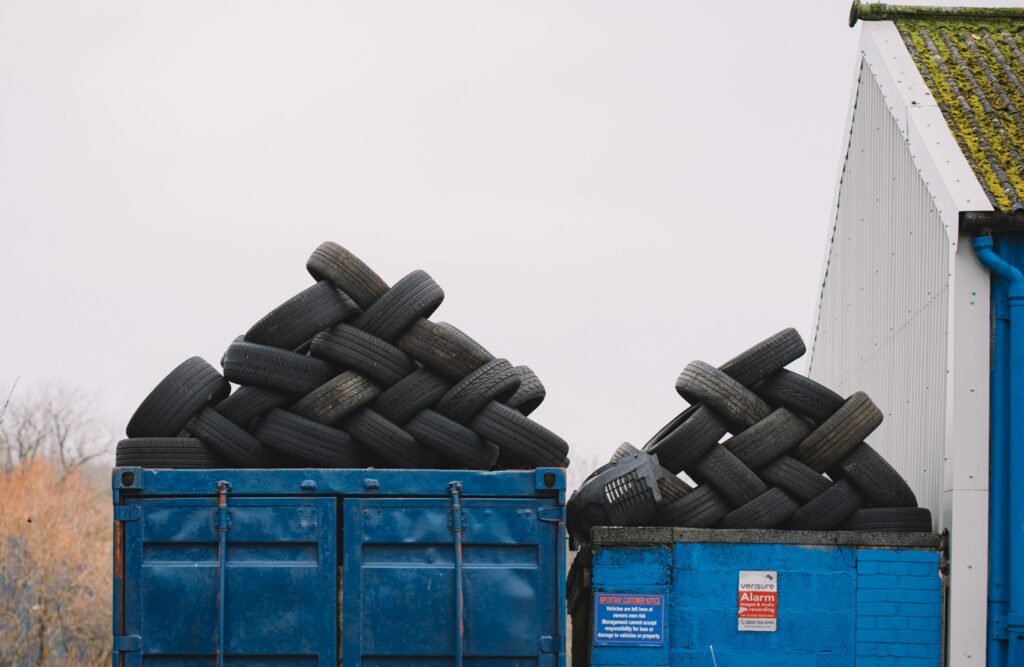
We partner with tyre dealers, service centres, international importers and municipal waste facilities to secure end‑of‑life truck and bus tyres.
1
Unloading & Initial Inspection
Tyres are offloaded onto conveyor belts and undergo a visual check for non‑tyre debris (stones, metal fasteners) that could damage equipment.
2
Sidewall & Tread Separation
Automated knives split the tyre’s sidewalls from the central tread, allowing dedicated downstream processes for each component.
3
Bead‑Wire Removal
Specialised bead‑wire remover machines extract the high‑tensile steel bead wire, preserving its integrity for re‑melting.
4
Primary Shredding (Rubber Blocks)
The remaining carcass is fed into a low‑speed, high‑torque primary shredder, breaking tyres into 20–300 mm rubber blocks.
5
Secondary Shredding (Rasper)
Rubber blocks are further reduced by a shredder, yielding 5–25 mm chips that balance throughput with separation efficiency.
6
Steel Extraction
Chips pass under powerful magnetic separators, which remove 100% of embedded steel wires for recycling into construction‑grade rebar.
7
Granulation
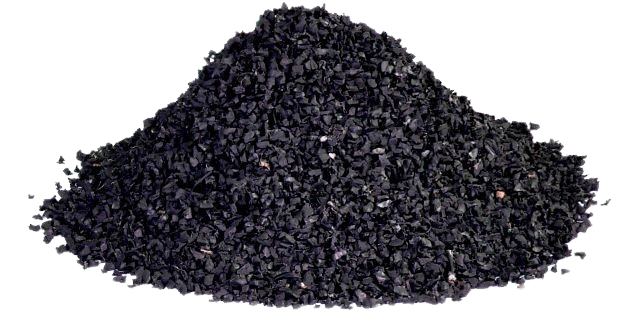
Metal‑free rubber chips enter granulators, where it grinds them into 1–5 mm granules per client specification.
8
Fibre Separation
Granules are conveyed through air‑classifier systems that blow out textile fibres, resulting in pure rubber crumb. This step guarantees 100% fibre‑free output
9
Sieve Classification
Crumb is sieved through multi‑deck screens to segregate particles into defined mesh sizes (10‑ to 40‑mesh).
10
Fine Grinding
Under controlled conditions, select fractions undergo fine milling to produce fine mesh up to 140 mesh.
11
Final Sieving & Quality Control
We re‑sieve all output to verify particle uniformity and conduct lab tests (moisture, ash content). Batches must meet ISO 9001 purity standards.
12
Packaging & Dispatch
Approved rubber crumbs and by‑products are packed in 50 kg high‑strength PP bags or bulk jumbo bags ready to dispatch.